Ceiling Fan Light, Drone Ceiling Fan, and Ceiling Fan with Remote: Smart Comfort for Every Room
A ceiling fan is no longer just a seasonal appliance that spins above the living room. Today’s fans combine lighting, smart control, and bold design into one hardworking fixture. Whether you are upgrading a bedroom, finishing a home office, or refreshing a modern living area, three options stand out: the ceiling fan light, the drone ceiling fan, and the ceiling fan with remote. Each brings a different kind of value, and together they show how far ceiling comfort has come.
The best choice depends on the room, the ceiling height, and how you want to control airflow. A fan with an integrated light can replace two fixtures at once. A drone-inspired model can make a design statement while moving air efficiently. A remote-controlled fan adds everyday convenience, especially in rooms where wall switches are awkward or hard to reach. Below is a practical guide to understanding each option and combining them wisely.
Ceiling Fan Light: One Fixture, Two Jobs
A ceiling fan light is a natural upgrade for rooms that need both air circulation and illumination. Instead of installing a separate light kit and fan, you get a coordinated fixture that saves ceiling space and simplifies the look. Many models use dimmable LED panels, which means you can shift from bright task lighting to a softer glow without changing bulbs.
This type of fan works especially well in bedrooms, kitchens, and small living rooms where clutter-free ceilings matter. The light is usually centered beneath the motor, so it distributes evenly across the room. When shopping, pay attention to lumen output, color temperature options, and whether the light kit is integrated or removable.
What to Look For in a Ceiling Fan Light
- Dimmable LED lighting for flexible brightness through the day.
- Adjustable color temperature from warm white to cool white.
- Reversible blades to change airflow direction between seasons.
- Quiet motor technology for bedrooms and study areas.
A good ceiling fan light does not just brighten the room. It makes the room feel calmer, cleaner, and more complete.
Drone Ceiling Fan: Design That Looks Ahead
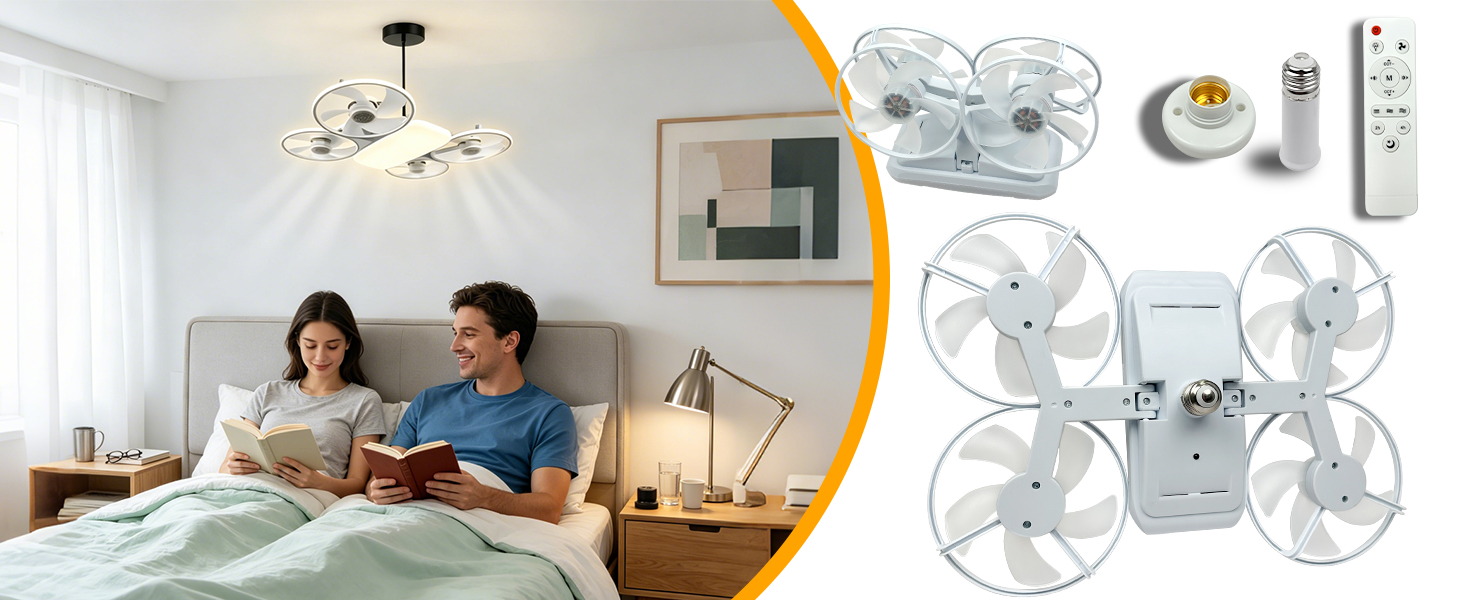
The phrase “drone ceiling fan” usually describes a fan with a futuristic, drone-inspired silhouette. These models often feature compact central hubs, streamlined blades, and a sleek mechanical look. The appeal is partly visual, but it is also practical: many drone-style fans are engineered for efficient airflow, low noise, and smooth speed control.
In a modern living room or minimalist workspace, a drone ceiling fan can act as a focal point. Its geometric shape feels more intentional than a traditional fan, and its compact form can suit lower ceilings when the model is rated for that installation. The key is to treat “drone” as a design category, not a promise of flight. Always check the product specifications for blade span, motor type, noise level, and recommended room size.
Drone Ceiling Fan Checklist
- Motor quality: A DC motor often delivers smoother speeds and quieter operation.
- Blade pitch: The angle affects how much air the fan moves.
- Installation height: Confirm the fan is safe for your ceiling height.
- Style match: Pair the fan with clean lines, neutral colors, and uncluttered lighting.
If your room already has strong decorative elements, a drone ceiling fan can balance the space with a crisp, technical edge. If the room is very traditional, consider a more transitional model instead. The goal is harmony, not contrast for its own sake.
Ceiling Fan with Remote: Convenience You Will Actually Use
A ceiling fan with remote gives you control without stretching for a pull chain or walking to a wall switch. That matters more than it sounds. In a bedroom, you can adjust the fan from bed. In a high-ceiling living room, you can change speed without a ladder. In a home office, you can switch from a gentle breeze to stronger airflow during a video call without breaking focus.
Remote-controlled fans often include multiple speed settings, light dimming, and reverse-direction control. Some remotes are simple handheld units, while others can be wall-mounted or paired with smart-home systems. For daily use, look for a remote that is easy to label, has clear buttons, and includes a cradle or holder so it does not disappear into the sofa cushions.
Remote Features That Matter
- Separate light and fan buttons for quick, intuitive changes.
- Memory function so the fan returns to your preferred setting.
- Compatible wall holder to keep the remote accessible.
- Smart-home pairing if you want voice or app control.
How to Choose the Right Combination
Start with the room’s primary need. If lighting is weak, choose a ceiling fan light. If design is the priority, explore a drone ceiling fan. If convenience matters most, prioritize a ceiling fan with remote. In many cases, the best answer is a single fixture that combines all three: an integrated LED fan with a drone-inspired body and a remote control.
Before buying, measure the room and the ceiling height. Check the fan’s recommended square footage, airflow rating, and noise level. Confirm whether the remote is included or sold separately, and decide whether you want dimmable lighting, reversible airflow, or smart-home compatibility. A little planning now prevents the common mistake of choosing a beautiful fan that is too small, too loud, or too complicated for the room.
Final Thoughts
The modern ceiling fan has become a multi-purpose fixture. A ceiling fan light simplifies the ceiling and improves illumination. A drone ceiling fan brings a forward-looking design language and efficient air movement. A ceiling fan with remote adds comfort you can control with one hand. Choose based on the room’s needs, and you will get more than a cooling appliance: you will get a smarter, more comfortable space.