Islamic Keychains: Meaningful Muslim Religious Keychains for Everyday Faith
An Islamic keychain is a small object with a large purpose. It jingles softly in a pocket, hangs from a bag, or rests beside a set of car keys, yet it can carry deep spiritual meaning. For many Muslims, a Muslim keychain is not just an accessory. It is a daily reminder of identity, gratitude, and connection to faith. Whether you call it a religious keychain, an Islamic keychain, or a Muslim keychain, this simple item can transform an ordinary routine into a moment of reflection.
In a world that moves quickly, reminders matter. A keychain is touched dozens of times each day. That repeated contact makes it an ideal place for a meaningful symbol, a beautiful name, or a short prayer. The best Islamic keychains combine craftsmanship, modesty, and personal significance without being loud or impractical.
Why a Religious Keychain Matters in Daily Life
Keys represent access, responsibility, and movement. We use them to enter homes, start cars, open offices, and secure belongings. A religious keychain adds another layer: it reminds the owner that every opening and closing is part of a life lived with awareness of God. For students, professionals, parents, and travelers, a Muslim keychain can be a gentle anchor.
“A small reminder can change the tone of an ordinary moment.”
That is the quiet power of a well-designed Islamic keychain. It may feature the name of Allah, a Quranic verse, a mosque silhouette, or a geometric pattern. Each time the owner reaches for their keys, the symbol offers a brief pause—a chance to remember patience, thankfulness, or purpose.
Common Designs and Symbols in Islamic Keychains
Islamic keychains come in many styles, from minimal and modern to traditional and ornate. The most meaningful designs usually include symbols that are recognizable within Islamic culture while remaining suitable for everyday use.
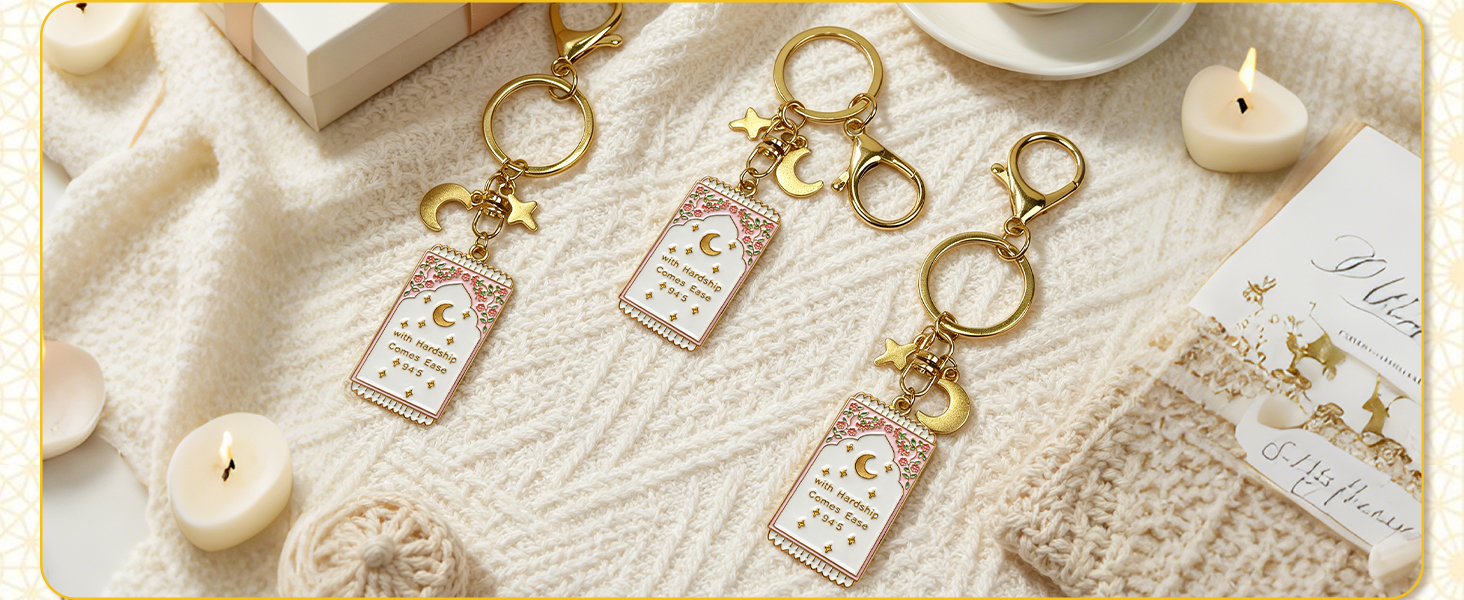
- Crescent and star: A classic emblem often associated with Islam and widely used in religious keychains.
- Allah calligraphy: Elegant Arabic script that turns a keychain into a constant remembrance.
- Quranic verses: Short phrases or protective prayers, such as “Masha’Allah” or “Bismillah,” engraved or printed on metal.
- Mosque silhouettes: A reminder of prayer, community, and the beauty of Islamic architecture.
- Prayer beads: Miniature tasbih-style charms that add texture and spiritual symbolism.
- Geometric patterns: Stars, interlocking lines, and arabesque motifs that reflect Islamic art and mathematics.
Calligraphy and Quranic Verses
Calligraphy is one of the most beloved forms of Islamic art. A keychain featuring carefully rendered Arabic letters can feel personal and dignified. When choosing a verse or phrase, consider the meaning and the quality of the lettering. Clear, accurate calligraphy honors the text and makes the keychain more beautiful over time.
Prayer Beads and Mosque Silhouettes
Miniature prayer beads offer a tactile reminder of dhikr, while a mosque charm evokes the warmth of congregational prayer. These designs work especially well for religious keychains that are meant to be gifted during Ramadan, Eid, or a pilgrimage.
Materials That Make a Muslim Keychain Last
Because keychains endure daily wear, material quality matters. A religious keychain should be sturdy enough to survive pockets, purses, and car ignitions while keeping its spiritual message intact.
- Stainless steel: Durable, rust-resistant, and ideal for engraving.
- Brass or copper: Warm tones and a traditional feel, though they may require more care.
- Leather: A soft, elegant option often combined with metal charms.
- Wood: Lightweight, natural, and perfect for laser-cut Arabic calligraphy.
- Acrylic or enamel: Colorful, affordable, and great for bold geometric designs.
A well-made item should feel balanced in the hand and resist fading or scratching.
Choosing the Right Islamic Keychain
When selecting an Islamic keychain, think about the person who will use it. A teenager may prefer a sleek metal charm with a short verse. A parent might appreciate a leather keychain with a subtle mosque emblem. A traveler going for Umrah or Hajj may treasure a keychain that commemorates the journey.
Consider the Recipient
Personal taste matters. Some people enjoy visible religious symbols, while others prefer something discreet. A small engraved disc, a simple crescent, or a meaningful date can be just as powerful as a larger design.
Check Craftsmanship
Inspect the clasp, the ring, and the finish. Sharp edges can snag fabric, and weak rings can break. If the keychain includes Arabic text, verify that the spelling and placement are correct.
Think About Personalization
Engraving a name, initials, or a special date turns a Muslim keychain into a keepsake. Personalized religious keychains are excellent gifts for weddings, graduations, newborn celebrations, and conversions to Islam.
Best Occasions for Gifting a Religious Keychain
- Ramadan and Eid: A thoughtful, affordable gift that carries spiritual meaning.
- Hajj and Umrah: A practical memento for pilgrims and their families.
- Weddings and engagements: A symbol of shared faith and new beginnings.
- New Muslims: A welcoming reminder of belonging and support.
Caring for Your Islamic Keychain
To keep a religious keychain looking beautiful, wipe metal surfaces with a soft cloth and avoid prolonged exposure to moisture or harsh chemicals. Store delicate keychains separately to prevent scratches. If the keychain includes leather, condition it occasionally and keep it away from direct sunlight.
More importantly, let the keychain serve its purpose. A Muslim keychain is not meant to be locked away. It is meant to be used, noticed, and appreciated—a small but steady reminder of faith in the middle of a busy day.
Final Thoughts
An Islamic keychain, Muslim keychain, or religious keychain can be simple or elaborate, traditional or modern. Its true value lies in the connection it creates between daily life and spiritual awareness. Whether you are buying one for yourself or giving one as a gift, choose a design that reflects sincere faith, respectful craftsmanship, and personal meaning.